

From ancient civilizations and mysterious plant chemistry to the origins of modern cannabis culture, this plant has been part of human history for thousands of years.
Whether you’re a cannabis enthusiast, a curious beginner, or simply someone who enjoys discovering unusual facts, here are 10 things that might make you look at cannabis a little differently.
1. Cannabis Has Been Around for Thousands of Years
Cannabis isn’t a modern discovery. Humans have interacted with the plant for thousands of years.
Archaeological evidence suggests that cannabis was cultivated in parts of Asia long before modern societies existed. Historically, people used different parts of the plant for practical purposes, including making rope, textiles, paper, and other materials.
In fact, hemp fibers were valued for their strength and durability. Long before cannabis became associated with modern counterculture, it was an important agricultural resource.
Fun fact: Some historical sailing ships used hemp-based ropes and sails because the fibers were strong and useful for maritime applications.
2. Cannabis Is Actually a Family of Different Plant Varieties
Many people think of cannabis as one uniform plant, but there is much more variety than that.
Cannabis plants can differ in appearance, aroma, chemical composition, and growing characteristics. Over generations, selective breeding has created a huge range of cultivars.
You may have heard the terms Indica, Sativa, and Hybrid. These labels are widely used in cannabis culture, although they don’t reliably predict a product’s effects. Chemical composition and individual differences matter much more.
This is one reason cannabis is such an interesting subject: two varieties can look and smell completely different.
3. The Smell Comes From Tiny Compounds Called Terpenes
Ever wondered why different cannabis varieties can smell like citrus, pine, fruit, pepper, or even fresh flowers?
Meet terpenes.
Terpenes are aromatic compounds found throughout nature. They’re responsible for many of the smells we associate with plants, herbs, fruits, and flowers.
For example:
- Limonene: Commonly associated with citrus aromas.
- Pinene: Found in pine trees and known for its fresh, woody scent.
- Myrcene: Often described as earthy, herbal, or musky.
- Linalool: Associated with floral aromas, including lavender.
- Caryophyllene: Known for its spicy, pepper-like character.
Terpenes aren’t exclusive to cannabis. They’re part of what makes a lemon smell like a lemon and a pine forest smell like a pine forest.
Cool fact: The same aromatic compounds found in some cannabis varieties can also be found in everyday plants and foods.
4. Your Body Has Its Own Endocannabinoid System
Here’s a fact that surprises many people: the human body naturally produces compounds that interact with cannabinoid receptors.
This system is called the endocannabinoid system (ECS).
Scientists study the ECS because it plays a role in several biological processes, including appetite, mood, memory, and pain signaling.
The system includes receptors, naturally produced compounds called endocannabinoids, and enzymes that help break them down.
It’s an important part of human biology, and researchers continue to investigate how it works.
The interesting part? This system exists naturally in the human body. It wasn’t discovered because people started using cannabis; scientists identified it through research into how cannabinoids interact with the body.
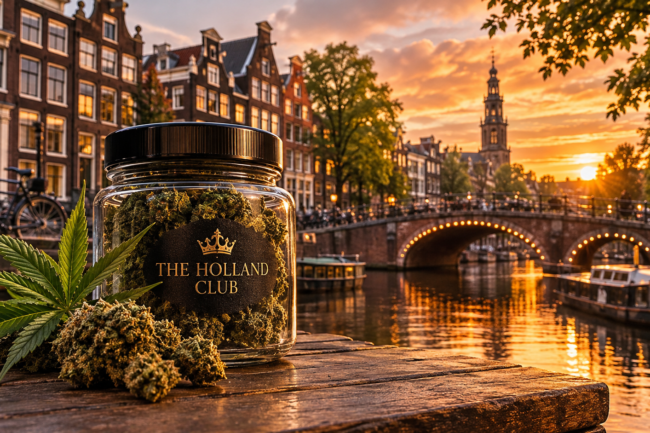
5. Amsterdam Became a Symbol of Cannabis Culture
When people think about cannabis culture in Europe, Amsterdam is often one of the first places that comes to mind.
The city’s famous coffee shop culture developed during the 1970s, helping establish Amsterdam as an internationally recognized destination for cannabis tourism.
However, there’s an important detail many visitors don’t know: Dutch cannabis policy is more complicated than simply making cannabis legal.
The Netherlands has historically tolerated certain small-scale retail sales under strict conditions, while production and wholesale supply have remained subject to separate legal restrictions.
This approach is often described as a policy of tolerance rather than full legalization.
Did you know? In the Netherlands, a traditional coffee shop selling cannabis is different from a regular café serving coffee.
6. Hemp and Cannabis Come From the Same Plant Family
You’ve probably heard of hemp, but what exactly makes it different?
Hemp and other cannabis varieties belong to the same plant species or closely related classifications, depending on the botanical framework being used.
The distinction is generally based on characteristics such as THC concentration, intended use, and applicable legal definitions.
Hemp has many industrial applications. Its fibers can be used for textiles, construction materials, paper, and other products. Hemp seeds are also used in foods and contain protein, fats, and other nutrients.
The plant is surprisingly versatile.
Fun fact: Hemp can be used to produce hempcrete, a plant-based building material made by combining hemp hurd with a lime-based binder.
7. The Cannabis Plant Produces More Than Just Cannabinoids
Cannabinoids get most of the attention, but they’re only one part of the plant’s chemistry.
Cannabis also contains terpenes and flavonoids, among many other naturally occurring compounds.
Flavonoids are found in numerous fruits, vegetables, and plants. They contribute to color and are part of the broader group of plant compounds scientists study.
This combination of different chemical components makes cannabis an interesting subject for botanical and laboratory research.
It also explains why simply looking at a plant’s appearance doesn’t tell you everything about its chemical profile.
8. Cannabis Seeds Have Their Own Interesting History
Cannabis seeds are among the most recognizable parts of the plant, but their story is bigger than many people realize.
For centuries, hemp seeds have been used as a food source in different parts of the world.
They contain plant-based protein, dietary fiber, and healthy fats. Shelled hemp seeds, sometimes called hemp hearts, are now commonly added to salads, smoothies, and breakfast bowls.
Cannabis seeds also played an important role in the development of modern cultivation, with growers selecting and preserving different plant characteristics over generations.
9. Modern Cannabis Research Is Still Developing
Despite thousands of years of human interaction with cannabis, modern scientific research is still exploring many unanswered questions.
Researchers investigate cannabinoids, the endocannabinoid system, plant genetics, cultivation methods, and potential medical applications.
However, it’s important to separate scientific evidence from internet claims. Not every popular statement about cannabis has been proven, and research findings don’t automatically apply to every product or individual.
A laboratory report, for example, can provide information about a specific sample’s chemical composition, but it doesn’t guarantee that a product is safe or suitable for everyone.
The more we learn, the more important accurate information becomes.
10. Cannabis Culture Is About More Than the Plant
Perhaps the most interesting fact of all is how much cannabis culture has changed over time.
From traditional agriculture and industrial hemp to modern botanical research, cultivation communities, design, music, and lifestyle conversations, cannabis has influenced many different parts of society.
Different countries have developed their own traditions, terminology, and approaches to the plant.
The Dutch influence is particularly recognizable, with Amsterdam becoming a familiar symbol of a distinctive European cannabis culture.
But culture continues to evolve, and so does the conversation around education, responsible use, regulation, and scientific understanding.
Final Thoughts: There’s Always More to Discover
Cannabis is a subject with a surprisingly rich history. It connects botany, chemistry, agriculture, science, culture, and even architecture.
Whether you’re interested in the science behind terpenes, the history of hemp, or the evolution of Amsterdam’s famous coffee shop culture, there’s always something new to learn.
And that’s what makes cannabis such an interesting topic: the more you explore, the more layers you discover.
Stay curious. Stay informed. Welcome to The Holland Club.